Identity Emergence Through the Narration of Memory
May 2024
I - What is Identity?
I think it is important to begin by asking a seemingly simple question; what is identity?
As discussed within the essay titled Identity by James Martin in 2010, it is usually defined as “typically ‘held’ individually” and “regarded as having distinctively social origins and expression”, wherein personal differentiation forms a boundary between self and other. Martin goes into some varying perspectives in which identity has been defined; traditionally as an “immortal soul” (Plato’s Phaedo) or pre-defined through class, gender or nationality as a wrapper around an individual’s social positioning. He also discusses contemporary perspectives, where identity is seen as a fluid, varying and subjective idea, with freedom to change and evolve into what suits personal preference (citing Giddens, A., 1991).
Jayne Hall Cunnick’s 2024 video titled Identity and Self- Concept Theory delves into ideas of identity primarily within the context of consumer marketing behaviour. However, more importantly and relevant to this essay, she discusses how possessions can be used as a personal extension of self. One example which she uses in her video which I would like to draw from is taken from the 1994 Quentin Tarantino movie Pulp Fiction. In this example, she talks about how Butch (a character in the movie) loses his father’s watch, and as a result of losing a possession which is of personal value, he is willing to go to extreme lengths to retrieve it, as it upholds his identity as his father’s son.
To anyone other than Butch, the watch would likely not be valued enough to risk death over - suggesting again that identity is an individually important and socially defined matter.
In light of these ideas, I would like to therefore determine identity as: appearing to be formed on the basis of a personal stance, either predetermined or self-defined, but nonetheless forming a socially clear, yet subjectively agreed upon separation between ‘self’ and ‘other’.
II - Identity as a Hyperreal Construction
The subjectiveness nature of identity, however, highlights the issue of having an objective truthful viewpoint, which is perhaps best expanded upon through the ideas of postmodernist theorist Jean Baudrillard. Taken from John Storey’s 2009 book Cultural Theory and Popular Culture (p.p. 186-191), Storey discusses the concept of ‘hyperreality’, which Baudrillard popularised as “the generation by models of a real without origins or reality”.
This is explained through media examples, such as the 1982 movie Rambo becoming a basis for American views on the Vietnam war despite being fiction based on a truth (simulation). Or similarly, man-made experiential attractions such as Disneyland (Figure 1) are meticulously designed “to be an infantile world, in order to make us believe that the adults are elsewhere, in the ‘real’ world”, i.e. a place made realer than reality itself. Baudrillard, in his 1981 book Simulacra and Simulation (from which Storey cites), says this is “hallucination of truth”; the ‘real’ world is so full of hyperrealities such as these that we no longer can get a sense of a ‘real’ truth, for almost everything exists as a simulated representation of any original reality.

Figure 1 - A "horse"-powered streetcar on Disneyland’s Main Street, in California. (Jim Corwin, date unknown)
However, in relation to the original subject of this essay, I would take from this the idea that identity and formation of self image can be considered akin to a form of hyperreal simulation. The construction of an identity as previously described could be said to be simulative, as it is the subjective self-retelling of a set of objective lived experiences. By narrating memory, an individual thus forms an autobiographical sense of self (Damasio, A., 2010), and a sense of identity arises from realising a hyperreal self- distinction against their percieved surrounding environmental ‘other’.
III - Blade Runner and the Voight-Kampf Test
Blade Runner (1982) particularly deals with these themes of identity and the hyperreal. An idea central to its plot is the ‘replicant’; genetically artificial humanoids engineered to be “more human than human” and used as ‘Off-World’ slave labour to aid humanity’s expansion across the stars. Replicants are outlawed on Earth and are designed to have a limited lifespan of 4 years to stop any form of advanced emotional development. The name of the movie stems from the specialised police officers (Blade Runners) who must hunt and ‘retire’ (kill) any dissenting or dangerous replicants to prevent them from causing harm.
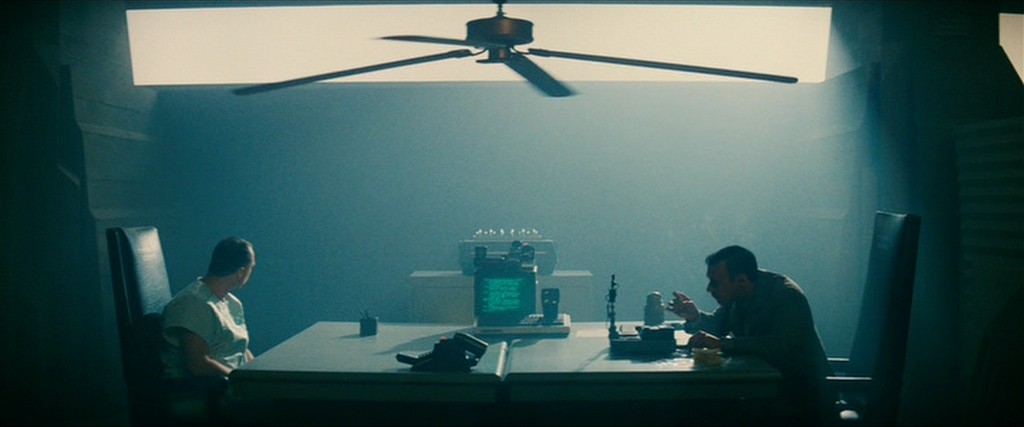
Figure 2 - Leon undergoing the Voight-Kampf test in Blade Runner (Dir. Ridley Scott, 1982)
In the beginning of the movie, there is a clear method to define who is human and who is replicant. The process for determining the difference is through a specialised ‘Voight- Kampf’ test, wherein a subject is interrogated on their reactions to a series of questions prompting moral dilemmas. To pass the test, the subject must show some form of empathy and capacity for emotional reasoning in their responses.
The scene in Figure 2 demonstrates a Nexus-6 replicant, Leon, undergoing the test. He struggles to respond to the questions and fails because he lacks the sufficient emotional awareness to be able to correctly reflect on a hypothetical empathy-based scenario. Whilst humans have the capacity for empathy and moral reasoning since they can reflect upon and gauge their actions in relation between ‘self’ and ‘other’ (as described previously), a replicant like Leon does not have any personal distinctions outside of the programming to be used as a tool Off-World. It is hoped that within his 4 year life, he will never develop a sufficient level of self-awareness to be able to distinguish himself from his environment; even if he did, he will die soon after, either due to his lifespan or by retirement if he is caught out.
IV - Replicant Memory and Identity Emergence
However, later in the movie, we are introduced to a prototype replicant called Rachael. Rachael is part of Tyrell Corporation (the manufacturer of replicants), yet is unaware that she is a replicant. When Deckard administers the Voight-Kampf test to her, she requires five times more questions than usual to determine the outcome. This is because Rachael is based on Eldon Tyrell’s niece, imbued with her memories, which, according to Tyrell, provides greater emotional depth than a standard Nexus-6 replicant. He states that if replicants are “gifted a past”, their emotions become “cushioned”, which leads to a “better control over them”. Rachael’s memory implants therefore mean she has a higher emotional complexity, because she has ‘past lived experience’ to refer back to; enough so that she becomes distressed at finding out she is a replicant and that her memories, therefore she, is fake.
In spite of his role as a blade runner, Deckard finds himself sympathising, and after she risks herself to save him, by the end of the movie he feels the need to protect her; eventually he rebels against his orders to ‘retire’ her along with the other Nexus-6 models, running off into hiding.
Similar to existing ideas on anthropomorphism and emotional presence (Waytz, A. et al., 2014), Rachael exhibits sufficient individualism that Deckard treats her akin to a ‘real’ woman, even though she is a simulated one. Memory has escalated her ability to discern herself individually (her own identity) by providing a reference point of who she is in relation to her environment, making her more anthropic than a standard replicant.
Another case of identity emergence within Blade Runner can be found in the arc of Roy Batty, a military combat replicant and leader of the other escaped Nexus-6 replicants that Deckard is tasked with retiring. Upon realising his shortened lifespan, he pursues his own goal of attaining further life; thus prompting his escape from the Off-World colony to Earth to find a cure. However, unlike Rachael whose identity is based on implanted memories, Roy’s self-created memories are a motif which runs throughout the movie.
When he confronts a ‘synthetic eye designer’ for information, he recounts “if only you could see what I have seen with your eyes”. He also expresses regret when he confronts his creator, Eldon Tyrell, saying he has “done terrible things” to reach this moment. But perhaps it is most evident in his final monologue, where he tells Deckard about seeing things that he “wouldn’t believe”, and infamously reflects on life’s temporality in face of immanent death - “all these moments will be lost in time, like tears in the rain”.
Through the narration of his lived experience, Roy demonstrates that by recalling and reflecting on his self- created memory, he can conceptualise himself as separate to his environment. In relation to the ideas explored within this essay, he too appears to reaches a sufficient level of cognition to determine his own identity as a consequence of memory narration, truly simulating a human.
Conclusion
Whilst Blade Runner demonstrates the ideas explored in this essay through fiction, I believe this topic is more relevant than ever given current advancements in artificial intelligence. Even through the limited scope explored in this essay, it seems plausible that memory retrieval through multimodal ‘lived experience’ (existing already in models such as OpenAI’s ChatGPT-4o) may eventually reach a similar point as in Blade Runner - wherein, a self-determined identity arises out of the ‘hyperreal’ construction of self, based on recollections of memory and a distinction of one’s position separate within their external environment.
Bibliography
Images
Jim Corwin / Photo Researchers / Universal Images Group, A horse-powered streetcar on Disneyland’s Main Street, in California - https://quest.eb.com/ images/139_1924645
Blade Runner (1982) Directed by Scott, R. - 00:05:08
Research
Martin, J. et al. (2010) ‘Identity’, Cultural Geography: A Critical Dictionary of Key Concepts - https://search.credoreference.com/ articles/Qm9va0FydGljbGU6MjUw NjIxMQ==?aid=275139
Plato (2013) Phaedo - https://www.gutenberg.org/ files/1658/1658-h/1658-h.htm
Giddens, A. (1991) Modernity and Self-Identity: Self and Society in the Late Modern Age
Cunnick, J. H. (2024) ‘Identity and Self Concept Theory Moodle resource’
Storey, J. (2009) Cultural Theory and Popular Culture
Baudrillard, J. (1981) Simulacra and simulation
Damasio, A. (2010) Self Comes to Mind: Constructing the Conscious Brain
Blade Runner (1982), Directed by Scott, R.
Waytz, A. et al. (2014), Who Sees Human? The Stability and Importance of Individual Differences in Anthropomorphism - http://dx.doi.org/10.1177/174569161036 9336
OpenAI (2024) Hello GPT-4o - https:// openai.com/index/hello-gpt-4o/